


The Forever War Nobody Declared
Dispatch — July 18, 2026
Seven nights in a row now. Seven nights of American bombers over Iran, of Central Command posting terse updates to social media the way you’d announce a delayed flight, of bridges collapsing into riverbeds in Hormozgan province while the rest of the world scrolls past.
I want to tell you why this week matters more than the six months of war that preceded it — because it’s the week the fiction of an ending died.
How we got here
On February 28, the United States and Israel opened this war with a strike that took out the head of the Iranian state itself — Supreme Leader Ali Khamenei, killed alongside a string of other officials, in the opening hours of what analysts now call the Third Gulf War. It was a decapitation strike in the truest sense, launched in the middle of ongoing nuclear negotiations. Iran answered with hundreds of missiles and thousands of drones fired across the region. Five weeks of fighting followed before a ceasefire, brokered on April 7–8, gave everyone room to exhale.
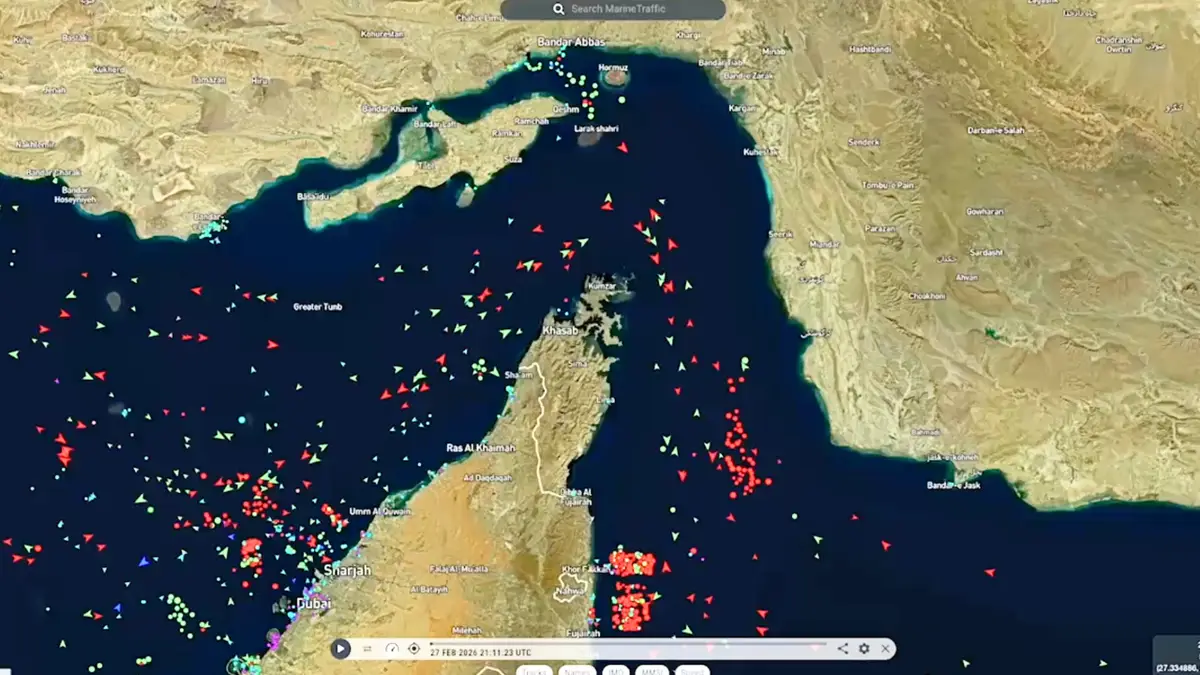
That relief was temporary. The ceasefire didn’t so much hold as fray — a slow unraveling over the Strait of Hormuz, that narrow, oil-choked waterway that has decided the fate of more than one Middle Eastern crisis. On June 14, mediators produced a memorandum of understanding: sixty days to negotiate Iran’s nuclear and missile programs, sanctions relief, and freedom of navigation through the strait.
We are now past the halfway mark of that sixty-day window. And instead of talks, we have bridges.
What’s happening right now
This week the U.S. expanded its target list to Iran’s bridges and, according to Iranian state media, civilian infrastructure — strikes on six bridges near the port city of Bandar Abbas alone killed at least eight people and wounded twenty more. Washington denies deliberately hitting civilian infrastructure. Tehran says otherwise. Both things are being reported as true by people standing in the rubble, which tells you something about how thin the line has become.
Iran, for its part, is no longer confining its retaliation to direct combatants. A missile strike hit a desalination plant in Kuwait — a country that draws nearly 90% of its drinking water from the sea. Kuwaiti soldiers were wounded. Bahrain and Syria were also targeted this week, according to Iranian claims, and an Indian ship’s engineer was killed when Revolutionary Guard forces struck his vessel in the Gulf of Oman. He was thirty years old, on duty in the engine room, and had nothing to do with any of this.
That’s the story underneath the story: a war that started as a fight between two governments is now a war that any tanker captain, any port worker, any family drawing water from a desalination plant has to worry about.
The rhetoric is getting worse, not better
An adviser to Iran’s supreme leader said this week that if U.S. strikes continue “for several more days,” Iran will move into “full-scale offensive operations.” An Iranian Revolutionary Guard general claims his forces already hit the former American base at al-Tanf in Syria in retaliation for U.S. strikes on Iranshahr — a base the U.S. had actually vacated back in February, which either means Iran is targeting ghosts or nobody fully knows what’s still on the ground.
Meanwhile, in Washington, House Republicans just cleared the first hurdle on a $95 billion Iran war package. That’s not the language of an administration planning to wind this down. President Trump, addressing the nation from the East Room this week, insisted the war is “going well” and that Americans “will see the fruits of that labor very, very shortly.” I’ve covered enough wars to know how that sentence ages.
Why I keep coming back to this one word: forever
I spoke — well, I read the words of — a distinguished fellow at a Washington think tank this week who used a phrase that’s been rattling around in my head since: forever war. Not hyperbole. A technical description. The U.S. has now been at war for more than twenty of the last twenty-five years — Afghanistan, Iraq, and now Iran, three major conflicts in the same stretch of the world, none of which resolved the way the presidents who started them promised.
That’s not a coincidence. That’s a pattern. And patterns are exactly what a good reporter — and a good reader — should be watching for, because they tell you more than any single night of airstrikes can.
What I’m watching next
Three things, in order of how fast they’ll tell us where this is headed:
- Whether the memorandum of understanding survives its own deadline. We’re at the halfway point of sixty days. If the second half looks like the first, the “interim agreement” language stops meaning anything.
- Oil. Brent crude is already climbing as Iran menaces the Strait of Hormuz. If the strait actually closes, even briefly, this stops being a regional story and becomes everyone’s story — fuel prices, shipping insurance, inflation, all of it.
- Whether Iran actually escalates to the “full-scale offensive” its officials keep threatening. Threats are cheap in wartime. The question is whether Tehran has decided threats aren’t enough anymore.
I don’t have a tidy ending for you, because there isn’t one yet. That’s the honest answer, and it’s the only one I’m willing to give you this week.
The numbers, as far as anyone can verify them
I said I didn’t have a tidy ending. I also don’t have tidy numbers — and in a conflict like this one, that’s itself worth reporting honestly rather than smoothing over.
By early April, cross-source tallies put total deaths across every country touched by this war somewhere between roughly 7,100 and 9,700, with close to 47,000 wounded. Those ranges exist because the sides counting the dead have different incentives for the number they land on:
- Iran — Tehran’s own Foundation of Martyrs has confirmed 3,468 killed; the independent, US-based monitor HRANA documents 3,636, including 1,701 civilians; American and Israeli estimates run as high as 6,000+. Iran’s Health Ministry has said the dead ranged in age from eight months to 88 years, and included nearly 400 children. Injured estimates span from 15,000 to 26,500, depending on whose count you use.
- Lebanon — swept into the war through Hezbollah, Beirut’s Health Ministry has put the toll above 3,400, and possibly over 4,000 by mid-year, though that ministry doesn’t distinguish civilians from combatants — a distinction that matters enormously and that we simply don’t have.
- Israel — 57 killed, according to consolidated tracking, with close to 9,000 wounded, many hurt while running for shelters during missile alerts.
- The United States — the Pentagon’s official figure is 14 service members killed in action (revised up from 13 in April after a non-combat helicopter death was folded into the tally), with 365 to 543 wounded depending on source and date.
- The Gulf states — Iraq has recorded 119+ deaths; the UAE, 13; Kuwait, 10; with smaller but real tolls in Bahrain, Saudi Arabia, Oman, and elsewhere — the countries caught in the crossfire of a war that isn’t officially theirs.
I want to be straightforward with you about what these numbers are and aren’t. They are the best public accounting available, drawn from government ministries, the Pentagon, and independent monitors like HRANA. They are not agreed-upon facts. Every government here has a reason to inflate the other side’s toll and minimize its own, and I’d rather hand you the range and the sourcing than pretend anyone has a clean count.
How the timeline actually runs
February 28, 2026 — The war opens. The U.S. (under the codename Operation Epic Fury) and Israel (Operation Roaring Lion) launch coordinated strikes on Iran’s nuclear, military, and leadership targets. Supreme Leader Ali Khamenei is killed in the opening hours — a decapitation strike aimed at the top of the Iranian state, launched, notably, in the middle of ongoing nuclear talks between Washington and Tehran.
Late February through early April — Five-plus weeks of intense, reciprocal fighting. Iran answers the initial strikes with hundreds of missiles and thousands of drones fired across the region. The Strait of Hormuz becomes the central pressure point, with shipping disrupted badly enough to cause fuel shortages as far away as Asia.
April 7–8 — The United States and Iran, with Israel included, agree to a ceasefire. It is fragile from day one. Within a day, Israeli strikes on Lebanon on April 8 become the single deadliest day of the war for that country — over 250 killed, more than 1,100 wounded, by Reuters’ count. Iran re-closes the Strait of Hormuz in response. The truce survives only on paper for long stretches through April and May, with U.S. forces at one point firing on tankers attempting to dock at an Iranian port and Iran seizing a vessel in return.
June 14–17 — Mediators land a more formal instrument: a memorandum of understanding, signed by both presidents and entering into effect June 17. Unlike a comprehensive peace treaty, this is explicitly a short-term framework — a sixty-day window meant to produce real negotiations over three things: Iran’s nuclear and missile programs, the sanctions regime against Tehran, and guaranteed freedom of navigation through the Strait of Hormuz.
July 2026 — We are now past the memorandum’s halfway point, and instead of talks converging, the first half of that sixty-day window has been marked by continued Iranian attacks on commercial shipping, hundreds of renewed U.S. strikes on Iranian military targets, and retaliatory missile and drone fire across the region. On July 16, President Trump declared the ceasefire “over.” The seven consecutive nights of U.S. strikes I described above are what came after that declaration, not before it — which is the detail that tells you this isn’t a truce fraying at the edges anymore. It’s a truce someone has formally called off.
What the memorandum actually says — and doesn’t
This is worth being precise about, because “ceasefire” and “memorandum of understanding” have been used almost interchangeably in coverage, and they’re not the same thing. A ceasefire is a promise to stop shooting. This memorandum was something narrower and, in theory, more durable: a negotiating framework with a clock attached, meant to produce an actual deal on nuclear limits, sanctions, and shipping rights before the sixty days ran out.
It was never a peace treaty, and its own architects seem to have known it was fragile — hence the short window rather than an open-ended process. What we’re watching now, in effect, is what happens when a framework built to buy time runs out of the time it was built with, and neither side has the deal it was supposed to produce.
That’s why the bridges matter more than they might otherwise. Targeting infrastructure — bridges, power plants, port surveillance towers — is a different category of warfare than targeting military assets. It signals a shift from managing a ceasefire violation to prosecuting a war Washington has stopped pretending is paused. Whether Tehran responds to that signal with the “full-scale offensive operations” its officials keep threatening, or whether both sides are posturing for whatever comes after the memorandum’s sixty days expire, is the story I’ll be following next.
