

12 Common Online Scams You Should Never Fall For
The internet has made life easier than ever. We can shop, bank, work, study, and connect with people around the world—all from our phones or computers.
Unfortunately, scammers have evolved too.
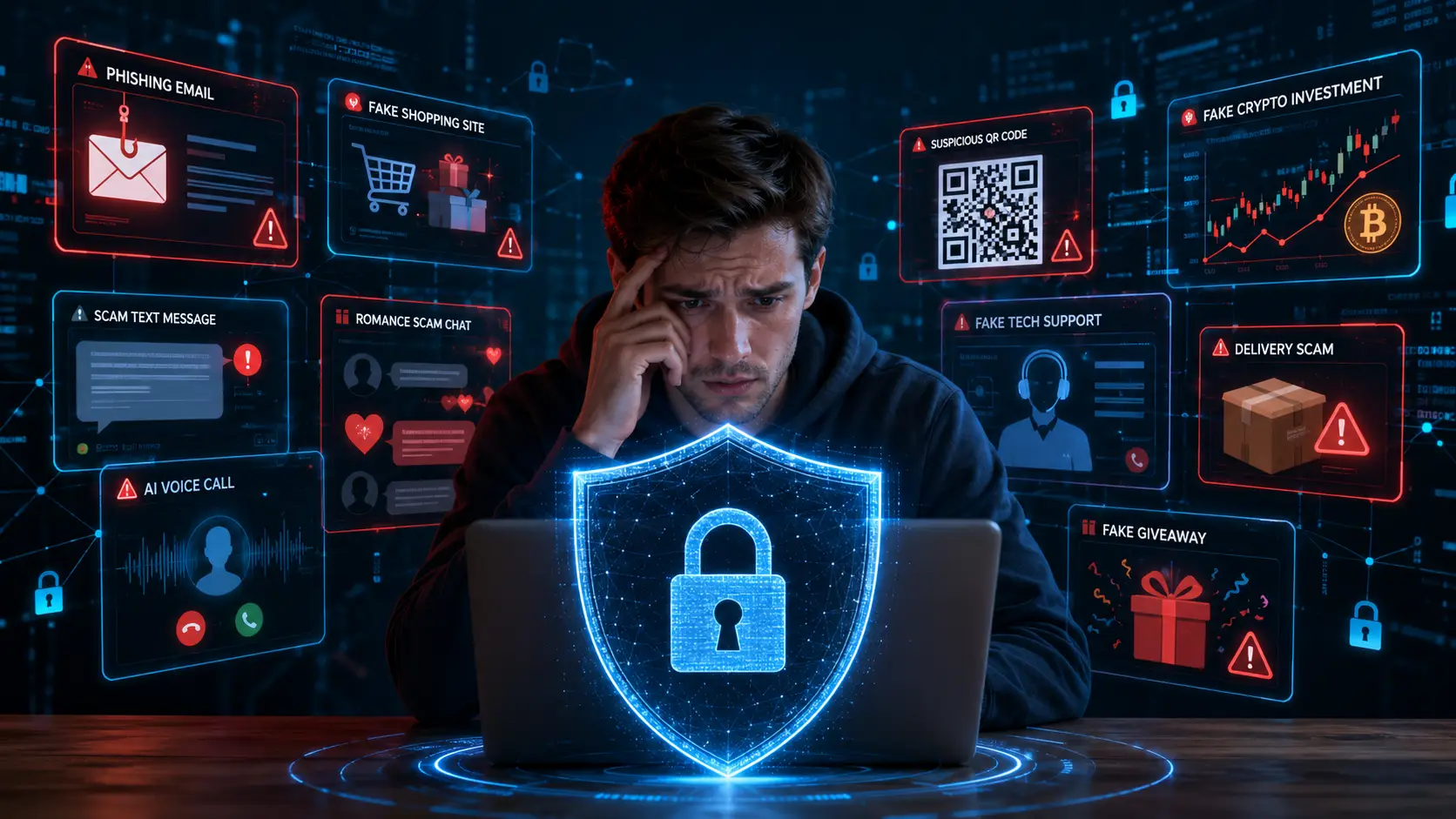
Every day, millions of people receive fake emails, fraudulent text messages, suspicious phone calls, or encounter convincing websites designed to steal money or personal information. These scams are becoming increasingly sophisticated, often using artificial intelligence to create realistic messages, voices, and even videos.
The good news? Most scams follow familiar patterns. Once you know what to look for, they’re much easier to spot.
Here are 12 of the most common online scams and how you can avoid becoming a victim.
1. Phishing Emails
Phishing is one of the oldest—and still one of the most successful—online scams.
Scammers send emails pretending to be trusted organizations such as banks, delivery companies, streaming services, or government agencies.
These emails often claim there’s an urgent problem with your account and ask you to click a link or download an attachment.
Warning Signs
- Generic greetings like “Dear Customer”
- Urgent language (“Your account will be suspended”)
- Suspicious links
- Poor grammar or spelling
- Unexpected attachments
Stay Safe
- Never click links in suspicious emails.
- Visit the company’s official website directly instead.
- Enable two-factor authentication (2FA) on important accounts.
2. Fake Shopping Websites
Scammers create websites that look like legitimate online stores.
They advertise luxury products at unbelievably low prices to tempt shoppers.
Once payment is made, the products never arrive—or customers receive cheap counterfeit items.
Warning Signs
- Prices that seem too good to be true
- Limited or no contact information
- No customer reviews
- Recently created website domains
- Only unusual payment methods are accepted
Stay Safe
Research unfamiliar stores before making a purchase and use payment methods that offer buyer protection.
3. QR Code Scams
QR codes have become common for payments, menus, and event tickets—but scammers are taking advantage of them.
Fraudsters place fake QR code stickers over legitimate ones or send QR codes via email or text. Scanning them can lead to phishing websites or fraudulent payment pages.
Stay Safe
Always verify where a QR code comes from before scanning, especially in public places.
4. Investment and Cryptocurrency Scams
Promises of guaranteed profits are a major red flag.
Scammers often promote fake cryptocurrency projects, investment platforms, or trading opportunities through social media or messaging apps.
Many victims invest money only to discover they can’t withdraw their funds.
Warning Signs
- Guaranteed high returns
- Pressure to invest quickly
- Celebrity endorsements that can’t be verified
- Requests to keep the investment secret
Stay Safe
Research investments carefully and remember: if it sounds too good to be true, it probably is.
5. Tech Support Scams
A pop-up suddenly appears on your screen claiming your computer is infected with a virus.
It urges you to call a phone number immediately.
The “technician” may ask for remote access to your device or demand payment for fake repairs.
Stay Safe
Legitimate technology companies do not display alarming pop-ups asking you to call support.
Simply close the browser window and run your trusted antivirus software if you’re concerned.
6. Job Offer Scams
Fake employers advertise attractive remote jobs with high salaries and minimal qualifications.
Eventually, applicants are asked to pay for training, equipment, or background checks.
A real employer will never require you to pay to get hired.
Stay Safe
Research the company, verify the recruiter’s identity, and avoid jobs that require upfront payments.
7. Romance Scams
Scammers create fake dating profiles and spend weeks or months building trust.
Eventually, they invent an emergency and ask for money.
Some victims lose thousands of dollars before realizing they’ve been deceived.
Stay Safe
Never send money to someone you’ve only met online, regardless of how convincing their story may seem.
8. Delivery and Package Scams
You receive a text claiming your package couldn’t be delivered.
The message asks you to click a link to pay a small “redelivery fee.”
The website is fake and designed to steal your payment information.
Stay Safe
Track deliveries using the courier’s official website or app instead of clicking links in unsolicited messages.
9. Fake Charity Appeals
Scammers exploit natural disasters, humanitarian crises, and emergencies by pretending to represent charities.
They pressure people to donate immediately.
Stay Safe
Donate directly through the official website of a registered charity rather than through links shared in emails or social media posts.
10. Social Media Giveaways
Posts claim you’ve won a smartphone, laptop, or cash prize.
To claim it, you’re asked to pay a “shipping fee” or provide personal information.
The giveaway is fake.
Stay Safe
Verify promotions through the company’s official social media accounts or website.
11. AI Voice and Deepfake Scams
Artificial intelligence has made scams even more convincing.
Criminals can clone a person’s voice or create realistic fake videos to impersonate family members, executives, or public figures.
Victims may receive urgent calls requesting money or sensitive information.
Stay Safe
If you receive an unusual request, contact the person through a known phone number or another trusted method before taking any action.
12. Fake Customer Support Numbers
Searching online for customer support can sometimes lead to fake phone numbers promoted by scammers.
Victims call expecting help, but instead provide account details or payment information.
Stay Safe
Always obtain customer support contact information from the company’s official website or app.
Red Flags That Should Make You Stop and Think
Most online scams have one or more of these warning signs:
- They create a sense of urgency.
- They promise unrealistic rewards.
- They ask for passwords or verification codes.
- They request payment using gift cards, cryptocurrency, or wire transfers.
- They pressure you to act immediately.
- They ask you to keep the transaction secret.
If you notice any of these signs, pause and verify before responding.
How to Protect Yourself Online
Following a few simple habits can significantly reduce your risk:
- Use strong, unique passwords for every account.
- Enable two-factor authentication wherever available.
- Keep your devices and apps updated.
- Avoid clicking unexpected links in emails or messages.
- Download apps only from official app stores.
- Check website addresses carefully before entering personal information.
- Monitor your bank and credit card statements regularly.
- Be skeptical of offers that seem unusually generous.
What to Do If You Think You’ve Been Scammed
If you suspect you’ve fallen victim to an online scam:
- Stop communicating with the scammer immediately.
- Change passwords for affected accounts.
- Contact your bank or payment provider as soon as possible.
- Enable two-factor authentication if it isn’t already active.
- Scan your device for malware using trusted security software.
- Report the scam to your local cybercrime or consumer protection authority.
- Warn friends or family if your social media or email account may have been compromised.
Quick action can reduce the damage and may even help recover lost funds in some cases.
Final Thoughts
Online scams are becoming more sophisticated, but they all rely on one thing: convincing people to act before they think.
Whether it’s a fake shopping deal, a phishing email, a romance scam, or an AI-generated voice call, the best defense is caution. Take a moment to verify unexpected requests, use trusted websites, and never share sensitive information unless you’re certain who you’re dealing with.
A few extra seconds of verification can save you from losing money, personal data, or access to your accounts. Staying informed is one of the most effective ways to stay safe online.
Frequently Asked Questions (FAQs)
1. What is the most common online scam?
Phishing emails and text messages remain among the most common scams, as they target large numbers of people and often imitate trusted organizations.
2. Can AI make online scams more dangerous?
Yes. AI can generate convincing emails, clone voices, and create realistic images or videos, making some scams harder to detect.
3. How can I tell if a website is fake?
Look for secure connections (HTTPS), check the domain name carefully, research reviews, and verify contact information. Be cautious of websites offering deals that seem far below market prices.
4. Should I click links in text messages about package deliveries?
Only if you were expecting a package and can verify the sender. When in doubt, visit the courier’s official website or app directly.
5. What’s the best way to protect my online accounts?
Use strong, unique passwords, enable two-factor authentication, keep software updated, and never share verification codes with anyone.

1 Comment
Hello I am so happy I found your website, I really found you by error, while
I was searching on Google for something else, Regardless I am
here now and would just like to say many thanks for a remarkable post and a all round entertaining blog
(I also love the theme/design), I don’t have time
to go through it all at the minute but I have saved it and also included
your RSS feeds, so when I have time I will be back to read more, Please do keep up
the great job.